
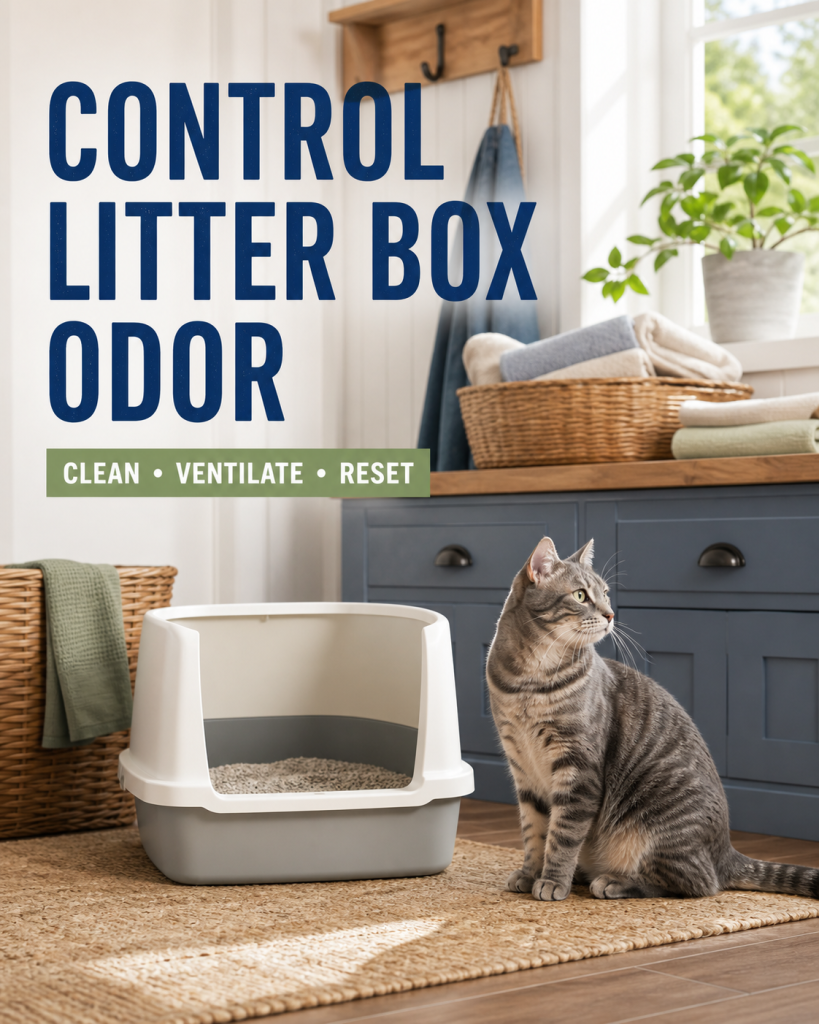

Litter box odor is easier to control when you remove its source instead of covering it with fragrance. Scoop on a dependable schedule, keep the box and surrounding floor clean, use a mild care method that your cat accepts, and allow ordinary air movement around the litter area. The goal is not to make the room smell perfumed. It is to keep the box usable, the cleanup predictable, and noticeable odor from building up between resets.
Start with the source, not the scent
Odor can build when waste remains in the box, damp litter sits against the bottom, residue collects in scratches or corners, or tracked particles remain on the nearby floor. A scented spray or heavily fragranced litter may change what a person notices for a short time, but it does not remove those sources.
Begin by checking the ordinary routine. When is the box scooped? Where does the filled scoop or bag go? Is the waste container closed and removed regularly? Can the cat enter and leave the area without passing cleaning supplies, laundry, or another pet? Does the box stay dry after it is washed?
The ASPCA notes that many cats prefer a clean box and unscented litter. That makes a source-first routine useful for both housekeeping and normal box acceptance. Avoid adding multiple scents, deodorizers, or abrupt litter changes simply because the room has developed an odor.
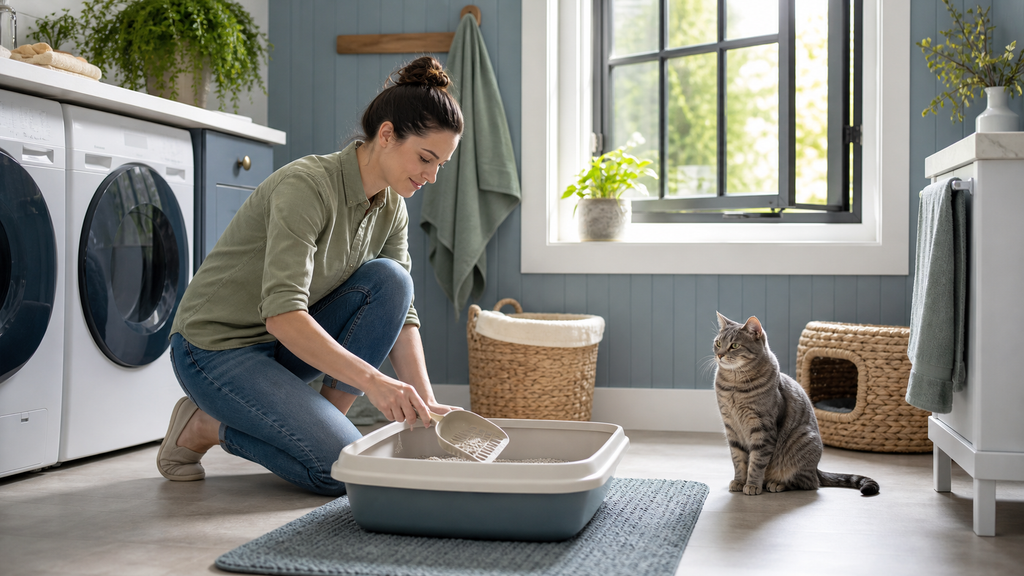
Use a daily scoop-and-reset sequence
The exact frequency depends on the number of cats, boxes, litter system, and normal use. A dependable daily check is a practical starting point. In a busy household, attach it to something that already happens, such as the morning feeding routine or the evening kitchen reset.
Follow this short sequence:
- Wait until the box is not in use and the cat has an open route away.
- Remove feces and urine clumps with the scoop intended for the litter system.
- Check the bottom and corners for damp or stuck material without aggressively scraping the box.
- Put waste into the household’s designated closed container and remove it on a regular schedule.
- Collect dry litter from the mat edge and the first section of nearby floor.
- Return the scoop and supplies to a clean storage point that does not block access.
- Wash your hands after handling the litter area.
This is a short maintenance pass, not a full wash. The purpose is to prevent one day’s waste and scattered litter from becoming several days of buildup.
Keep the box easy to use and easy to clean
An odor-control setup should not make the cat squeeze through a narrow opening or step over a line of cleaning products. Preserve the route first. Keep the box stable, provide enough room for normal turning and digging, and avoid placing tools where they can fall or make noise beside the cat.
Check the box surface
Inspect the interior under good light. Deep scratches, cracks, rough seams, or a lingering odor after appropriate washing can make an older box harder to reset. Cornell’s feline health guidance notes that old boxes that retain odor may need replacement. That is a condition check, not a fixed calendar rule: follow the box maker’s guidance and replace damaged equipment when it can no longer be cleaned or used safely.
Keep litter depth and refills consistent
Follow the litter and box instructions rather than continually adding fresh litter on top of old material. Topping up does not replace waste removal or periodic box care. When changing litter depth or type, avoid several abrupt changes at once. A sudden change can make it difficult to tell whether a cat dislikes the new litter, the new box, or the new location.
Put the scoop where the routine actually happens
Store the scoop close enough to use, but not directly on food-preparation surfaces or where it can contaminate clean household items. A washable holder or designated container can keep the tool separate. Clean the holder when residue is visible and follow its care directions.
Deep-clean only as needed—and keep it gentle
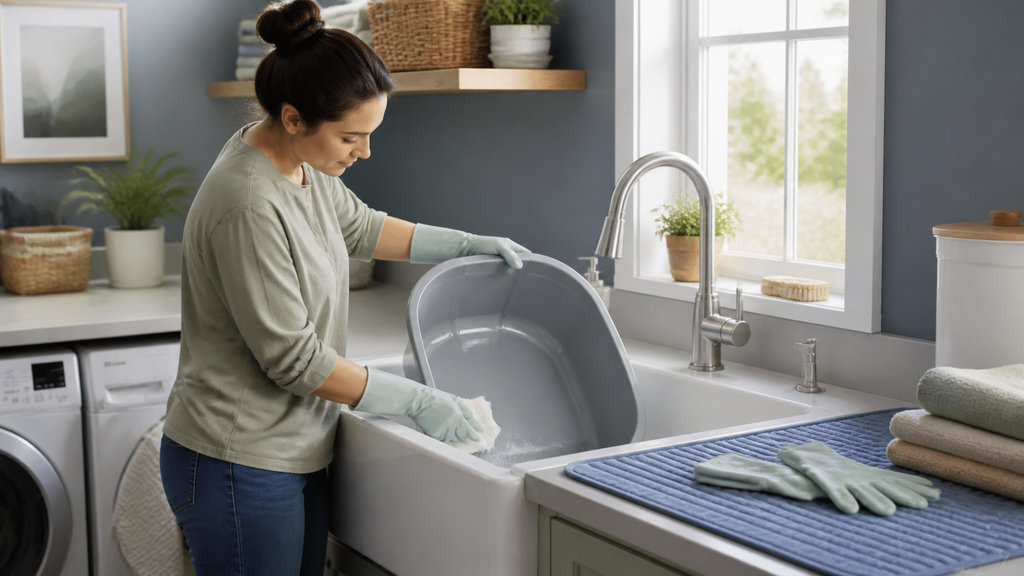
A full box wash should fit the litter system, the box material, and the manufacturer’s current instructions. Empty the box at a time when another suitable box is available if your household needs continuous access. Wash with the mild method allowed for that box, rinse thoroughly, and let it dry before refilling.
The ASPCA and Cornell both describe mild, unscented care approaches rather than strong fragrance. Do not improvise by combining household cleaners. The CDC warns never to mix bleach or disinfectants with other cleaners, because dangerous vapors can be released. This guide does not recommend bleach for routine litter-box cleaning. Always follow the label and manufacturer instructions for the actual box and cleaning product in your home.
If a washed box still has a strong persistent odor, inspect it for damage and confirm that it dried completely. Do not keep adding stronger products to chase a smell that may be held in damaged material.
Improve ordinary air movement without creating a new problem
Air movement helps a room recover after the box is serviced, but the litter area still needs to feel calm and accessible. Place the box in a location with ordinary household ventilation when possible, not in a sealed closet that traps moisture and odor. At the same time, avoid a strong draft blowing litter dust into the room or directly at the cat.
An open window may help when weather, screens, and household safety allow. A bathroom or laundry-room exhaust fan can support normal room ventilation if it is already intended for that space and does not frighten the cat. Keep electrical devices and cords away from litter, water, and digging paws.
Ventilation does not replace scooping. If the room only smells acceptable while a fan is running at full speed, return to the waste, box, mat, and floor routine first.
Use a four-zone odor check
| Zone | What to inspect | Practical response |
| Box contents | Waste, damp clumps, stuck material, inconsistent litter depth | Scoop, maintain, and refill according to the litter system’s directions. |
| Box surface | Scratches, cracks, damp corners, residue after washing | Use the approved gentle care method; replace damaged equipment when appropriate. |
| Landing area | Tracked litter, dust, damp spots, a dirty scoop holder | Reset the mat edge and nearby floor; clean designated tools separately. |
| Room | Closed closet, poor air movement, overflowing waste container | Improve ordinary ventilation, close and remove waste, and keep the route clear. |
This check prevents random cleaning. Work from the box outward, and stop when each real source has been addressed.
Match the routine to the household
Multi-cat homes
More cats can mean faster buildup and more frequent checks. It can also mean that access and social pressure matter. Do not solve odor by forcing several cats through one narrow litter station. Provide appropriate box access and locations for the household, and watch for one cat blocking another.
Small apartments
In a small home, define a compact litter station: box, landing mat, scoop storage, waste route, and the first section of floor. Choose a location you can reach without moving furniture every day. A realistic station is one you can service quickly without turning the cat’s only bathroom into a storage corner.
Covered versus uncovered boxes
A cover may change how odor is noticed by people, but it can also hold odor inside the cat’s immediate space. Box preference varies. Do not assume that a cover solves the source, and do not force a sudden change solely for appearance. Keep the box clean and monitor normal use whichever style is appropriate for the cat.
Avoid these common odor-control mistakes
Adding fragrance before removing waste
Fragrance can mix with odor rather than remove it. Scoop and reset first. If a product has a strong scent, consider whether it fits the cat’s established preference and the manufacturer’s directions before using it.
Moving the box every time the room smells
Relocating the box can create an access or acceptance problem while leaving the cleaning routine unchanged. Improve the current source control and ventilation first. If the location truly does not work, plan a gradual, cat-appropriate move.
Washing constantly with stronger products
More chemical exposure is not automatically better cleaning. Use the mildest method permitted by the product instructions, never mix cleaners, rinse as directed, and let the box dry.
Ignoring the mat, scoop, and nearby floor
The box may be clean while residue remains on the landing area or tool holder. Include those surfaces in the same defined routine instead of waiting for a full-room cleanup.
Treating unusual elimination as a housekeeping issue
Odor outside the box, repeated accidents, straining, crying, frequent attempts, blood, or a sudden change in normal box use is not simply a room-freshness problem. The Cornell Feline Health Center advises veterinary evaluation when litter-box use becomes inconsistent, because health, access, location, and preference can all matter.
Handle litter with extra care when needed
The CDC advises that people who are pregnant or have weakened immune systems should, when possible, have someone else change cat litter. If that is not possible, use gloves and wash hands with soap and water afterward. The CDC also recommends changing litter daily and washing hands after handling cats or their supplies.
Keep children away from the litter area and cleaning products. Follow local waste rules and the instructions for the litter system you use. This article offers a household routine, not medical advice; ask a healthcare professional or veterinarian about individual health concerns.
FAQ
How often should I scoop the litter box for odor control?
A daily check is a practical baseline, and some homes need more frequent scooping based on the number of cats and normal box use. The routine should prevent visible waste from accumulating while keeping the box calmly accessible.
Is scented litter better for odor?
Not automatically. Many cats prefer unscented litter, and fragrance does not remove waste or residue. Use a litter that the cat accepts and maintain it according to its directions.
Should I use an air freshener beside the litter box?
Start with source removal, box care, and ordinary ventilation. Avoid spraying fragrance into the cat’s immediate box area or relying on a scent to replace cleaning. Follow all product warnings and keep aerosols and chemicals away from the cat.
Why does a clean litter box still smell?
Check the waste container, scoop holder, mat, nearby floor, damp corners, incomplete drying, and damage to an older box. A persistent odor after correct care can be a sign that a cracked or scratched box is difficult to reset.
When should I call a veterinarian?
Seek veterinary guidance for sudden box avoidance, straining, crying, repeated trips, blood, elimination outside the box, or another significant change from the cat’s normal pattern. Do not try to solve those signs with fragrance or barriers.
Bottom line
To control litter box odor, remove waste on a reliable schedule, clean the box and surrounding zone with an appropriate gentle method, let washed surfaces dry, and provide ordinary room ventilation. Keep the route open and avoid masking the source with heavy fragrance. A small routine repeated consistently is more useful than an occasional aggressive cleanup.
Keep building your routine
If loose litter is also moving beyond the box, use our guide to reduce cat litter tracking. Browse more practical routines in Litter & Odor, or begin with Start Here.