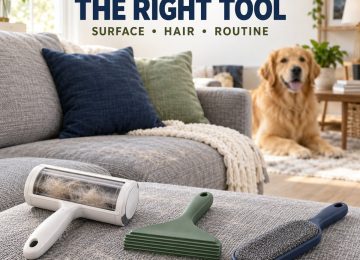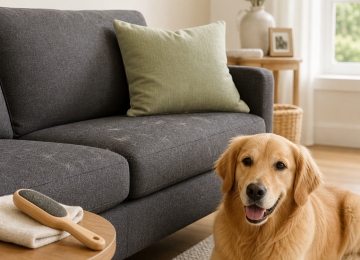

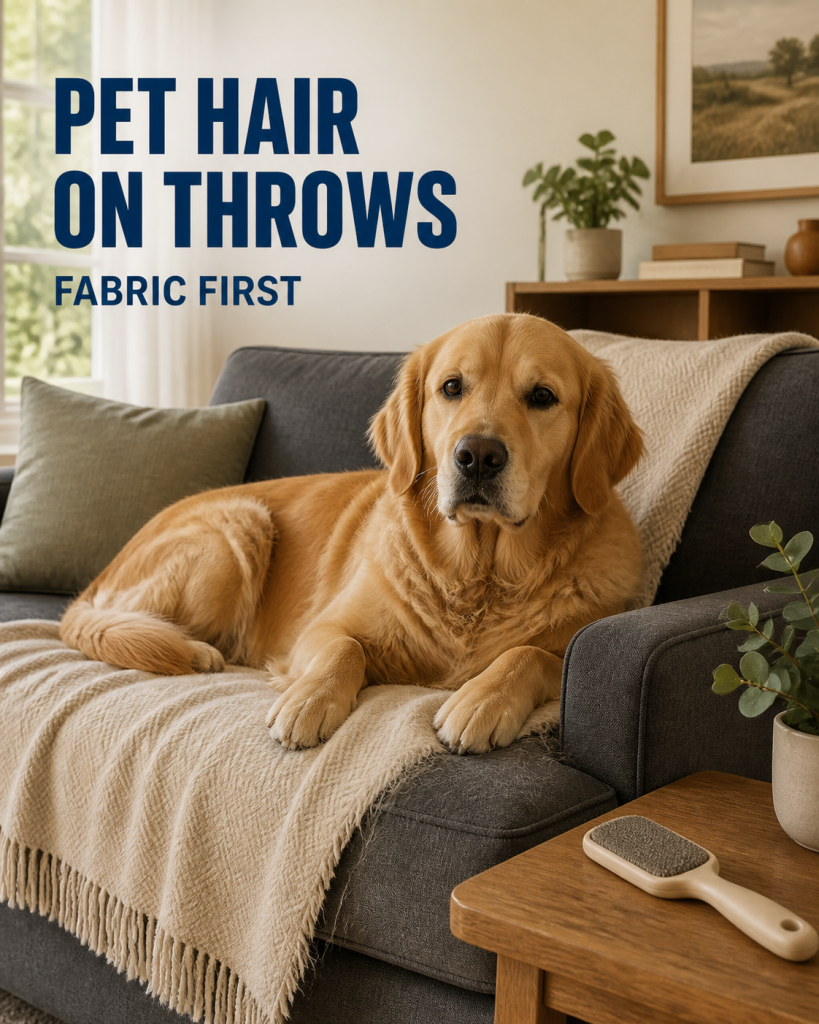

Pet hair is easiest to manage when you deal with it before a blanket becomes a laundry problem. Start by checking the fabric-care label, remove loose hair with a dry method, and wash only when the item is meant to be washed. The best routine is the one you can repeat without turning a favorite throw into a high-maintenance project.
Last reviewed: August 17, 2026.
Start with the fabric, not the hair
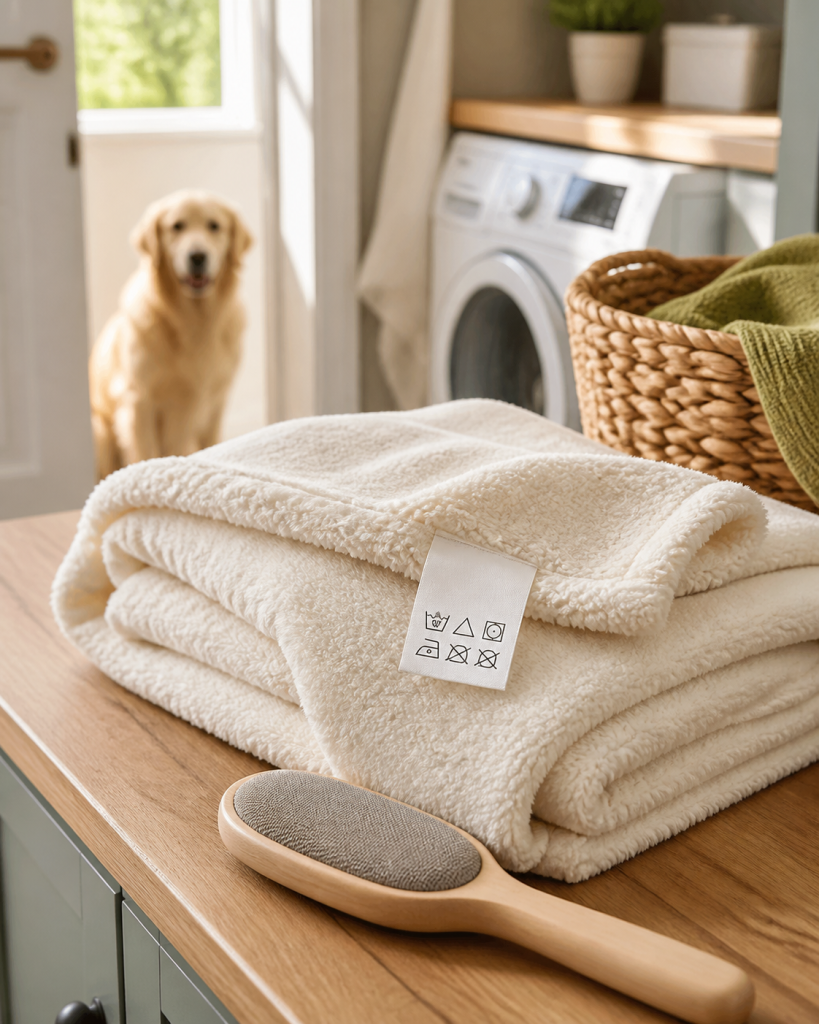
Before trying to remove pet hair from blankets, look at the care label and the weave. A smooth, tightly woven throw can handle a different routine than a loose knit, fleece blanket, wool blend, or delicate decorative piece. If the label gives specific washing, drying, or heat instructions, follow those first.
This matters because hair removal is not the only goal. A method that pulls at a loose weave, leaves the blanket rough, or makes the fabric harder to clean next time is not a good long-term solution. When you are unsure, start with the gentlest dry option and test it on a small, less visible area.
For a household with several blankets, work on one item at a time. That keeps loose hair from simply moving from one throw to the next.
Use a dry pass before you wash
A dry pass removes the hair that is sitting on the surface before it reaches your washer, dryer, floor, or other fabrics. It also helps you see whether the blanket needs a full wash or just a quick reset between wash days.
Lift loose hair first
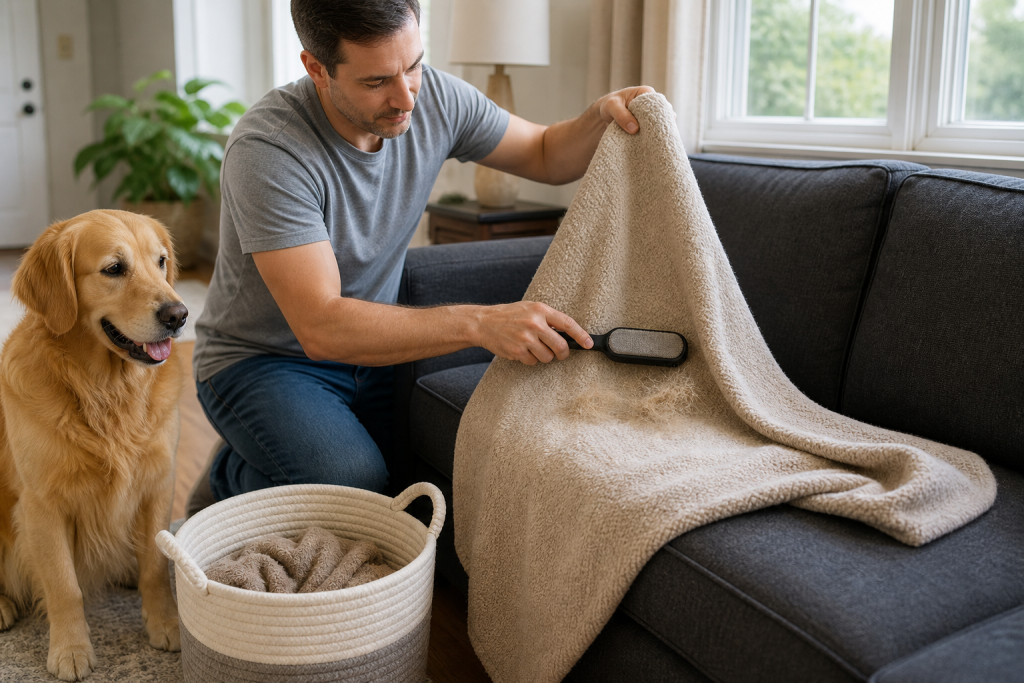
Lay the blanket flat on a clean surface or hold it over an easy-to-clean floor. Use a lint brush, a pet-hair tool intended for fabric, or another gentle dry method that is suitable for the material. Work in short passes in one direction, then pause to clear the tool before it becomes overloaded.
Start on the broad center area, then move to the places where hair tends to collect: folds, edges, seams, tassels, and the side that touches the couch or pet bed. Do not scrub aggressively. Light, repeatable passes are usually easier on the fabric and easier to keep doing.
Keep the hair contained
Have a small trash container or reusable collection bag nearby. Removing hair from the tool as you go is less messy than carrying a hair-covered blanket across the room after you finish. If you need to shake the item, do it outdoors only when that is practical and allowed where you live; otherwise, use the dry tool first and fold the blanket inward before moving it.
Wash only when the care label allows it
Once the surface hair is reduced, decide whether the blanket actually needs laundering. Food spills, odor, visible dirt, or a care schedule may call for a wash. A blanket that is otherwise clean may only need the dry step and a spot check.
If you wash it, use the water temperature, cycle, detergent guidance, and drying instructions on its care label. Avoid treating every throw as if it were a heavy-duty dog bed. Decorative blankets and blankets with special fibers may need gentler handling, air drying, professional cleaning, or a different routine altogether.
Before washing, clear as much loose hair as you reasonably can. This does not guarantee that no hair will remain, but it reduces the amount being moved around with the item. Check your washer and dryer after the load, and clean any accessible lint area according to the appliance manufacturer’s instructions.
Dry without creating a second cleanup job
The drying step can make a blanket feel fresh, but it should match the care label. If the label allows machine drying, do not assume more heat or more time is better. If it calls for low heat, air drying, or laying flat, use that instruction.
When the blanket is dry, give it a quick visual check before putting it back on the couch. A final gentle dry pass on the side your pet uses most can catch the hair that surfaced during laundering. Then fold it or place it back in its usual spot instead of leaving it in a mixed pile with other laundry.
Build a small blanket reset you can keep up with
You do not need to deep-clean every throw after every cuddle session. A simple routine can keep the job manageable:
| When | What to do | Why it helps |
| After a heavy shed or muddy outing | Do a quick dry pass on the blanket your pet used. | Removes surface hair before it spreads to the sofa and floor. |
| Before laundry day | Check the care label and remove loose hair first. | Helps you choose a method that fits the fabric. |
| After washing or drying | Inspect the high-use side and fold the blanket separately. | Keeps a clean blanket from immediately collecting hair from another item. |
| Once the routine feels difficult | Use fewer throws, rotate them, or choose a smaller easy-care option. | A smaller routine is more likely to last. |
If the couch is the main source of the hair, address that surface too. Our guide on how to remove pet hair from a couch explains how to work from the fabric surface to cushion edges and the floor around it.
Avoid these common mistakes
Using a strong method before checking the label
Heat, water, friction, and strong adhesive tools do not suit every blanket. The care label is more useful than a one-size-fits-all tip.
Turning one quick pass into hard scrubbing
Aggressive rubbing can be hard on some fibers and may not be necessary. Use a light touch, check the result, and repeat only where the fabric still needs attention.
Washing a blanket that only needs surface cleanup
Overwashing may make a simple routine harder to maintain. If the blanket is clean apart from loose hair, use the dry method first and save laundering for when it is actually needed.
Ignoring the places where hair starts
Hair will keep returning if a pet uses the same couch cushion, bed, car blanket, or doorway area every day. Put your effort where the pet actually rests, then make the blanket routine part of that larger cleanup pattern.
When the blanket is part of a bigger pet-hair problem
Blankets are often a useful layer between a pet and upholstery. If you have a favorite couch throw, an entryway blanket, or a car blanket, it can be easier to reset that washable layer than to clean the entire surface every day. The key is not buying more items; it is choosing a setup that fits your space, your pet, and your actual laundry routine.
For more couch, laundry, and fabric-focused cleanup ideas, browse Pet Hair Removal. If you are building your first practical system, start with Start Here.
Bottom line
To remove pet hair from blankets and throws, start with the care label, clear loose hair with a gentle dry pass, then wash and dry only as the fabric allows. Focus on the high-use side, keep the hair contained as you work, and choose a routine simple enough to repeat. A well-used throw does not need to look perfect; it needs to be easy to reset for the next day.