

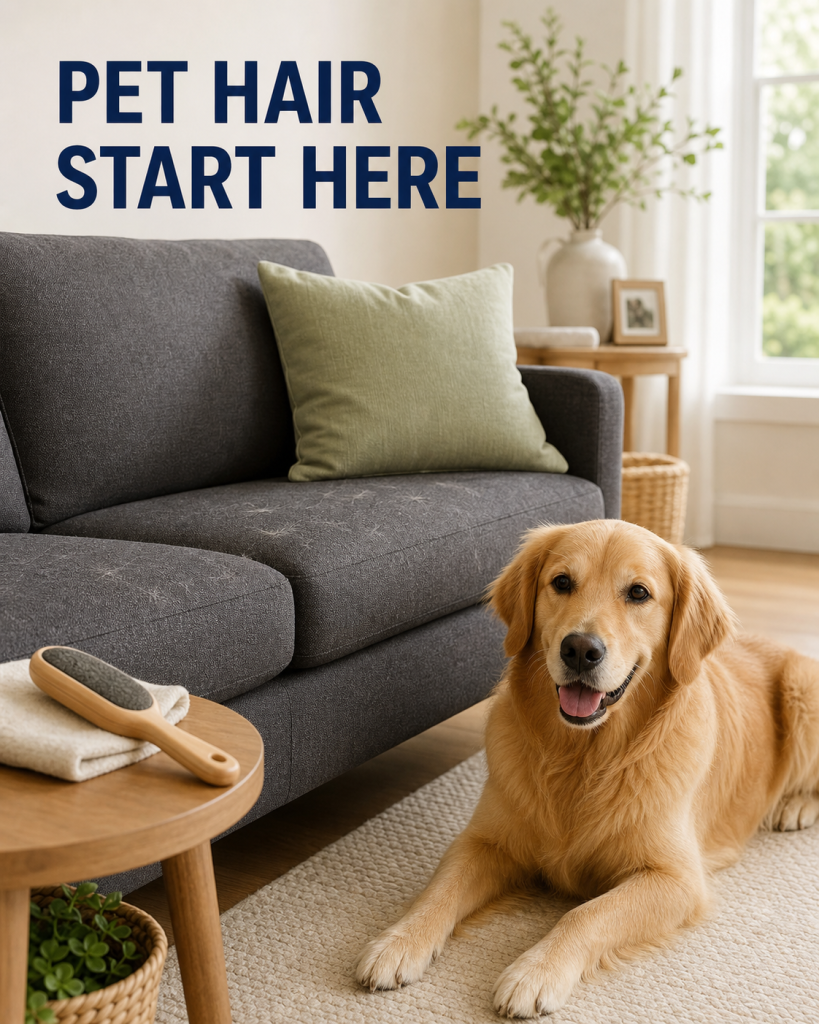

The easiest way to remove pet hair from a couch is to work in a consistent order: check the fabric care label, lift loose hair from the largest surfaces, clean seams and cushion edges, then do a quick floor check before you put the cushions back. A small routine that fits your couch is more useful than a complicated method you will avoid using.
This guide is about maintaining fabric and upholstered furniture, not promising that one tool or method is right for every couch. Fabrics, removable covers, pet coats, and household routines differ. Check the manufacturer’s current care label and any tool instructions before you use water, cleaners, heat, or a tool that could pull at the fabric.
Last reviewed: August 7, 2026.
Start with the fabric, not the fur
Before you try to remove pet hair from a couch, look for the upholstery care label. Some fabrics tolerate a gentle vacuum attachment or a dry lint-removal tool well; others have a pile, weave, finish, or removable cover that needs a more cautious approach. If you are unsure, start with the least aggressive dry method and test it in a hidden area.
It also helps to notice where hair collects. On many sofas, the seat cushions, the front edge, the back cushions, and the space where cushions meet the frame are the repeat offenders. Naming those zones keeps the job from turning into a vague, whole-room clean.
Reset the couch in a repeatable order
Start by removing throw blankets and loose pillows. Shake washable items only where it makes sense for your home, then set them aside. Take cushions off one at a time if they are designed to be removable. You do not need to empty the entire room; the goal is simply to make each surface easy to see.
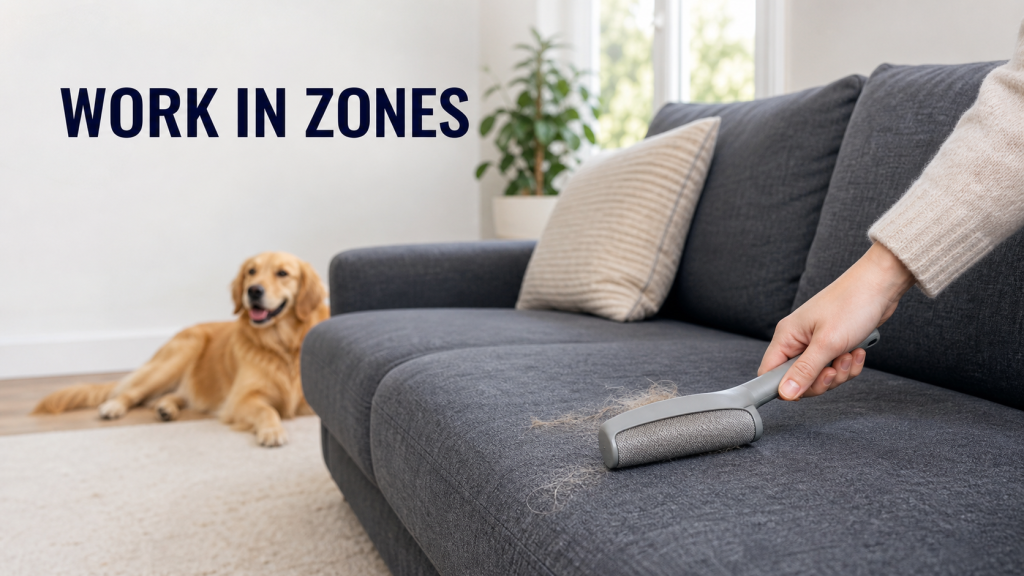
Work in small sections so loose hair does not move from one part of the couch to another.Lift loose hair from the big surfaces
Choose a dry tool that suits the fabric and use it on the seat, back, and arms in small overlapping sections. A lint brush, a fabric-safe reusable hair tool, or an upholstery vacuum attachment can be useful when the couch’s care directions allow it. Move slowly enough to gather hair rather than pushing it into a new corner.
If hair is clinging tightly, avoid scraping hard or using a sharp edge. Pressure that seems efficient can roughen a delicate weave or make a surface look uneven. When in doubt, use a lighter pass and repeat it instead of forcing the job.
Clean seams, cushion edges, and crevices
Once the large panels look better, focus on the places hair hides: along piping, under cushion edges, and where the back meets the seat. A small brush or suitable vacuum attachment can help you reach those areas without pulling the upholstery apart. Work from the top of the couch downward so debris does not land on a section you already cleaned.
If your cushions have removable covers, follow the label on the cover rather than assuming the whole couch uses the same care method. Let covers dry fully before putting them back on. Damp fabric can hold onto lint and create a new cleanup task.
Finish with a quick floor check
Hair often falls while you work. Before you replace cushions and blankets, make one quick pass on the rug or floor immediately around the couch. This small final step keeps the couch from looking clean while a ring of loose fur remains around it.
Choose one low-friction tool for everyday use
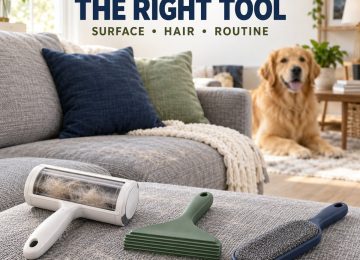
The best everyday setup is usually the one you will reach for between larger cleanups. Keep one fabric-appropriate tool near the couch: for example, a lint brush, a washable fabric tool, or an approved upholstery attachment. Store it where you can see it, rather than in a closet across the house.
Use the tool’s instructions and the couch’s care label as the deciding factors. No tool needs to solve every hair problem. A simple tool for the seat cushions plus a careful vacuum pass for seams may be enough for your household.
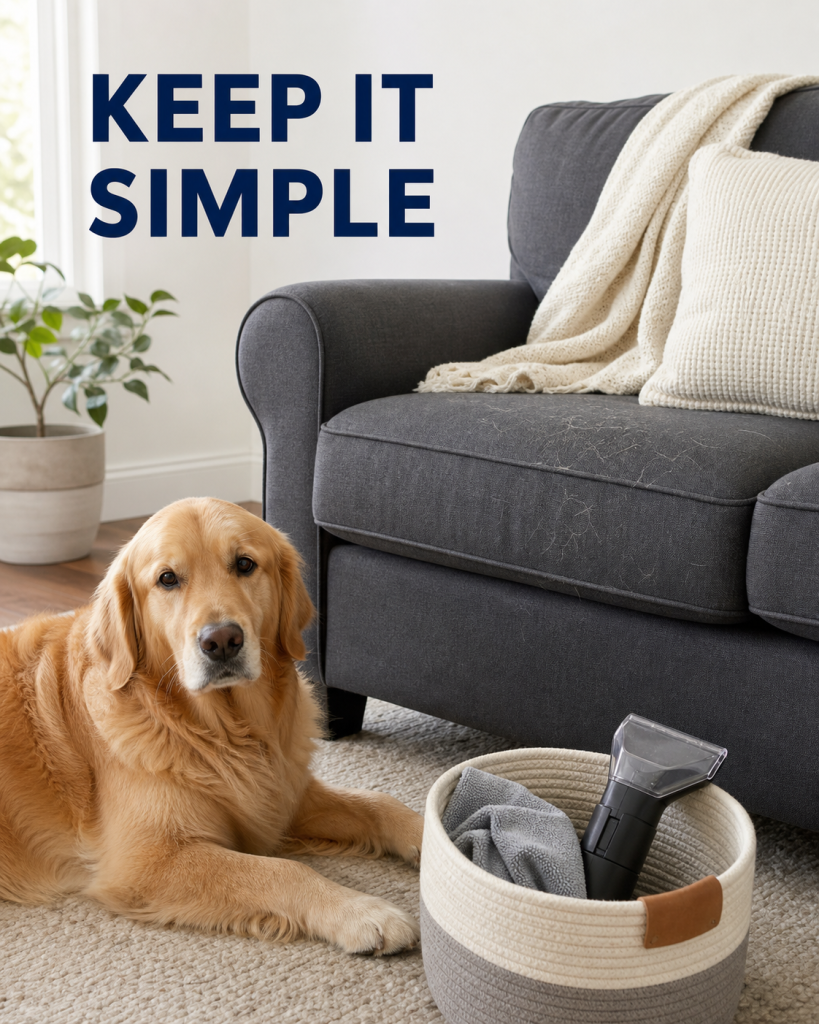
Keep the tools you actually use within reach of the couch.Make the routine fit the way your pet uses the couch
Pet hair is easier to manage when you clean according to real life instead of an ideal schedule. Try one of these simple rhythms:
| When hair shows up | A realistic first step |
After your pet’s favorite nap | Do a brief pass on that one cushion before hair spreads. |
Before visitors arrive | Reset the visible cushions, arms, and floor around the couch first. |
During a regular home reset | Remove cushions, clean seams, and wash only the covers that the label says are washable. |
During heavier shedding | Increase short dry cleanups instead of waiting for one exhausting session. |
If your pet has one preferred spot, a washable throw or designated cover may reduce how often you need to clean the upholstery itself. That is not a substitute for reading the fabric-care directions; it is simply a way to make the routine easier to repeat.
Avoid these common couch-cleaning mistakes
Starting with water or cleaner
Loose hair is usually easier to lift before any wet cleaning. Applying moisture first can make hair cling, and the wrong cleaner may not be suitable for the upholstery. Start dry unless the care label specifically calls for another method.
Using an aggressive tool to save time
Hard scraping, rough brushes, or improvised sharp tools can damage some fabrics. A slower, gentler pass is a better tradeoff when you do not know how a material will react.
Cleaning only the middle of the seat
The most visible hair may be on the cushion, but seams, arms, back cushions, and the floor around the couch are part of the same problem. Add those areas to your order so the reset feels complete.
Buying a tool before checking the care label
Marketing language cannot tell you what your couch fabric can handle. Start with the furniture maker’s care guidance, then choose a tool that works within those limits.
When pet hair comes back immediately
That does not mean you cleaned incorrectly. Pets shed, blankets move, and fabric can attract lint between cleanups. If hair returns quickly, shorten the routine instead of making it harsher: spend a minute on the preferred cushion after a nap, keep a throw in the favorite spot, and save a more thorough seam-and-floor reset for your regular cleaning time.
The goal is not a permanently hair-free couch. It is a living space that is comfortable for people and pets and manageable on a normal week.
Bottom line
To remove pet hair from a couch, begin with the fabric care label and work from broad surfaces to seams, cushion edges, and the floor. Keep one suitable tool close by, use light repeatable passes, and adapt the routine to the places your pet actually uses. That approach is easier on upholstery and more realistic to maintain.
Keep building your routine
New to pet-home cleanup? Begin with Start Here for a simpler approach to everyday messes. For couch, laundry, and fabric-focused routines, browse Pet Hair Removal.

Pingback: Reusable Pet Hair Removers: What to Compare Before You Buy
Pingback: How to Keep a Clean Home With Pets: A Room-by-Room Routine