


Keeping a clean home with pets is easier when each room has one small reset, one place for the tools, and one clear stopping point. The goal is not a house that never shows pet hair or paw marks. It is a routine that catches mess near its source, protects the surfaces that need special care, and prevents a five-minute job from becoming an all-day cleanup.
Last reviewed: September 22, 2026.
Map the home by mess, not by room size
Walk through the route your pet follows on an ordinary day. A dog may move from the door to the sofa, feeding station, bed, and yard again. A cat may move between the litter area, food and water, favorite chair, window, and sleeping spots. Those transitions matter more than the formal name of each room.
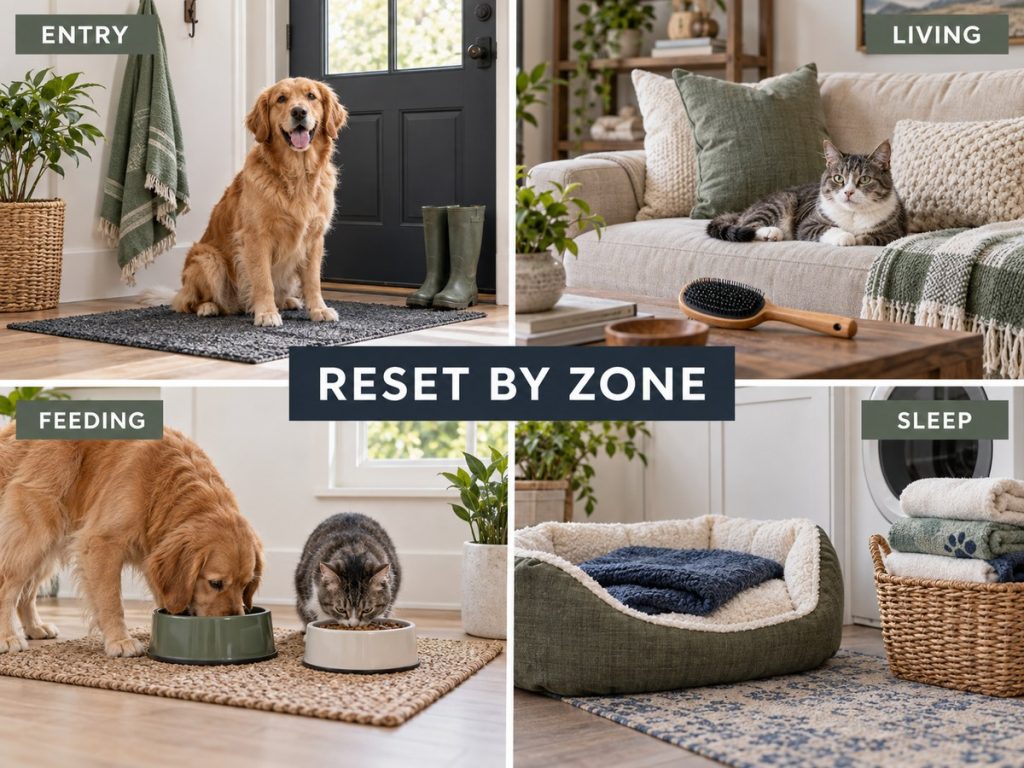
Mark five practical zones:
- Entry: outdoor dirt, moisture, leashes, towels, and shoes.
- Living: loose hair, dander, crumbs, toys, and upholstery.
- Feeding: bowls, splashes, dropped food, and storage.
- Sleep and laundry: beds, blankets, covers, and washable textiles.
- Litter or bathroom: tracked litter, waste, odor, and dedicated cleaning tools.
If your home does not have all five zones, combine them. A studio apartment can still have a defined mat beside the door, a feeding tray, a washable sofa cover, and a litter station. The purpose is to give each recurring mess a home and a next action.
Entryway: stop outdoor mess before it spreads
The entryway is a containment zone, not a display area. Keep the walking path clear and place the few items you actually use within reach: an absorbent towel, a mat that lies flat, and a container for clean and used supplies.
After a wet or muddy walk, pause before the dog moves deeper into the home. Remove loose dirt, dry paws gently, and hang damp items where they can dry without blocking the doorway. Do not leave wet towels or leashes in a sealed basket.
Our guide to stopping muddy dog paws from tracking through the house breaks the process into a repeatable arrival routine. If the mat itself is the weak point, compare size, door clearance, backing, and care instructions in how to choose a washable doormat for dogs.
Stopping point: the walking path is safe, paws are no longer transferring visible moisture or loose dirt, and the towel can dry.
Living room: clean the places pets actually use
Do not begin by vacuuming every open floor. Start with the sofa seat, throw, pet bed, or rug where hair accumulates fastest. Work from the broad surface to cushion edges and seams, then finish the nearby floor so loosened debris is not left behind.
A two-minute surface reset can be enough between deeper cleans. Return toys to one basket, lift visible hair from the highest-use seat, and shake or brush the pet blanket according to its care instructions. Rotate which deeper task you do each week instead of cleaning every textile every day.
For upholstery, first identify the fabric and its care label. Follow our fabric-first routine for removing pet hair from a couch without damaging the fabric. If you are choosing a manual tool, use the comparison method in reusable pet hair removers: what to compare before you buy rather than assuming one roller or edge is safe for every surface.
Stopping point: the main pet-contact surface is usable, loose debris has been collected, and the tool is emptied and stored.
Feeding zone: separate food cleanup from floor cleanup
Give food and water bowls a stable, wipeable area that does not sit in the main walking path. Pick up dropped food before it is carried into another room, wipe splashes, and keep the food scoop separate from the bowl.
The CDC’s example schedule recommends cleaning wet-food bowls after every use and dry-food and water bowls daily. Follow the current instructions for the exact bowl, mat, feeder, or fountain; only use a dishwasher when the item is labeled dishwasher-safe.
Cleaning and disinfecting are not the same task. The CDC explains that cleaning with soap or detergent physically removes dirt and germs, while disinfecting uses chemicals to kill germs. For most pet items, regular cleaning is usually sufficient; disinfecting is an additional step for situations such as contact with urine or feces, illness, or a higher-risk household. Follow the product label rather than inventing a stronger mixture.
Stopping point: old food is removed, bowls and the immediate surface are clean according to their instructions, and everything is dry or drying safely.
Sleep and laundry: use washable layers to reduce the workload
Pet beds, sofa throws, crate pads, and removable covers can keep loose hair and everyday soil concentrated on a washable layer. Before laundering, remove as much loose hair as practical so it does not simply move through the load.
Read every textile label. Close zippers, inspect seams, and use the appropriate cycle and drying method for that material. The CDC gives weekly cleaning as an example for pet beds, blankets, and habitats, but visible dirt, odor, illness, skin sensitivity, and the manufacturer’s directions may change the timing.
Drying is part of the routine. Do not return damp padding or thick bedding to a poorly ventilated corner. Our guide to removing pet hair from blankets and throws explains how to work from loose-hair removal to label-based washing without treating every fabric the same.
Stopping point: one clean sleeping layer is available, wet items can dry completely, and damaged seams or foam are set aside for repair or replacement.
Litter area: contain tracking and handle odor at the source
Build the litter routine around the box, the exit path, and the nearby floor. Keep a scoop, waste container, small broom or vacuum attachment, and any approved cleaning supplies close enough to use but secured away from pets and children.
Remove waste on a consistent schedule that suits the number of cats and boxes. Pick up scattered litter near the exit before it travels into the home. When the box or surrounding surface needs a deeper clean, follow the box material instructions and the cleaning-product label. Do not add fragrances or stronger chemicals merely to mask a persistent problem.
Use how to reduce cat litter tracking to refine the exit path, mat, and floor routine. For box placement, ventilation, waste removal, and cleaning boundaries, continue with how to control litter box odor.
Sudden litter-box avoidance, unusual urine or stool, persistent strong odor, straining, pain, appetite changes, or breathing problems are not housekeeping problems to solve with a different cleaner. Contact a veterinarian.
Stopping point: waste is removed, the exit path is clear, scattered litter is contained, and cleaning tools are secured.
Use a daily loop and a rotating weekly reset
A routine becomes manageable when the daily list stays short and the deeper work rotates.
| Zone | Quick reset | Rotating deeper reset |
| Entry | Dry paws, clear loose dirt, hang damp gear | Wash the mat or towels according to their labels; clean the basket and floor edge |
| Living | Pick up toys and remove visible hair from one high-use surface | Clean one upholstery zone, pet bed, or rug; finish the nearby floor |
| Feeding | Remove old food, clean bowls as required, wipe splashes | Clean the mat and storage area; inspect the fountain or feeder instructions |
| Sleep and laundry | Replace a visibly dirty layer and collect loose hair | Wash one bedding group; dry fully; inspect seams and padding |
| Litter | Remove waste and collect tracked litter near the exit | Clean the box and surrounding zone according to product and material directions |
For the daily loop, set a short limit—such as ten minutes—and stop when the most visible transfer points are contained. For the weekly reset, choose one or two zones that need attention rather than treating the table as a demand to deep-clean the whole house every week.
Keep a small tool station in each high-use zone
The fastest tool is usually the one stored safely near the mess. That does not mean every room needs a closet full of products. A simple zone kit might include:
- an entry towel and washable mat;
- one upholstery-safe hair tool near the sofa;
- a labeled scoop and wipeable tray at the feeding area;
- a laundry bag or basket for washable pet textiles; and
- litter tools used only in the litter area.
Keep wet, sharp, chemical, or chewable items secured. Do not store cleaning products beside food, treats, bowls, or toys. Empty reusable tools before returning them to storage so the next reset starts ready.
Follow these cleaning-product safety boundaries
Read and follow the item’s care instructions and every cleaner or disinfectant label. More product, a longer contact time, or a homemade mixture is not automatically safer or more effective.
The CDC’s pet-supply cleaning guidance says to keep pets away while cleaning and disinfecting and until treated items or surfaces are fully dry. It also warns never to mix bleach with ammonia or other cleaners. For birds, the CDC recommends disinfecting outdoors or in a separate room because their respiratory systems are especially sensitive to fumes. Cat households should avoid disinfectants that list phenol ingredients.
The ASPCA’s household-product guidance also emphasizes secure storage, label directions, ventilation, and keeping pets away until treated surfaces are dry. If a pet may have licked, chewed, inhaled, or contacted a cleaning product, contact a veterinarian or an animal poison-control service promptly; do not rely on a housekeeping article to assess an exposure.
Avoid these routine-breaking mistakes
Cleaning the whole house before the transfer points
If wet paws, a shedding blanket, or tracked litter continues moving through the home, broad floor cleaning will not stay finished. Contain the source and its exit path first.
Using one aggressive tool on every surface
A durable entry mat, woven sofa, fleece blanket, and finished wood floor do not share the same care limits. Match the method to the material and test an inconspicuous area when appropriate.
Making the daily list too long
A routine that requires deep-cleaning five zones every evening will be abandoned. Use the daily loop for containment and the weekly rotation for detail.
Hiding damp or dirty items in a basket
A closed basket can make the room look tidy while towels, bedding, or tools remain wet. Give damp items a drying location before storage.
Treating a persistent health or behavior change as an odor problem
Cleaning can remove ordinary soil, but it cannot diagnose illness, pain, anxiety, or elimination changes. Escalate unusual or persistent signs to a veterinarian.
FAQ
How often should a home with pets be cleaned?
There is no single schedule for every household. Reset high-transfer points daily or when visibly dirty, then rotate deeper tasks based on pet activity, materials, household risk, and product instructions. The CDC offers example frequencies for pet supplies, but visible soil, odor, illness, and care labels may require a different timing.
What should I clean first in a home with pets?
Start where mess enters or transfers: the doorway, the pet’s most-used sofa or bed, the feeding mat, or the litter-box exit. Containing the source makes the rest of the room easier to finish.
How can I keep pet hair under control without vacuuming every day?
Use washable layers on favorite resting places, make a short pass over the highest-use surface, and collect loose hair before laundering. Vacuum as needed for floors, crevices, and broader debris rather than treating it as the only tool.
Should I disinfect every pet area every day?
Not usually. The CDC distinguishes routine cleaning from disinfecting and says cleaning is generally sufficient for most pet items. Disinfect when the situation calls for it and only according to the product label, with pets kept away until the area is safe and dry.
What is the easiest pet-home cleaning routine to maintain?
Use one short daily loop for visible transfer points and one rotating weekly reset for a deeper zone. Keep the necessary tool safely nearby, define a stopping point, and avoid adding tasks that do not solve a recurring mess.
Bottom line
To keep a clean home with pets, organize the routine around transitions: outdoor dirt at the entry, hair on favorite resting surfaces, food around bowls, washable layers in sleeping areas, and litter at the box exit. Contain the source, use material-appropriate methods, rotate deeper tasks, and follow every care and cleaning-product label. A repeatable reset is more useful than a perfect room that takes all day to restore.
Keep building your routine
New here? Use Start Here to choose the mess that affects your home most. Browse Pet-Home Routines for systems you can repeat, or open the detailed guides linked in each room above.
